

Lighting in the Medical Field. Get the Best Out of Your Equipment.
Of all the things doctors, office managers, and their employees have to consider when it comes to running an efficient medical clinic, lighting is certainly not the first thing that comes to mind. But proper lighting both in the office and the operating room can make a huge difference. It affects everything from the mood of your patients and staff to your success on the operating table. This is because light has a profound effect on people visually, biologically, and emotionally. Proper lighting even reduces costs and pollution. But while this importance has always been there, with the 2013 EU ban on Halogen lights many hospitals and clinics are currently asking themselves what their options are going forward. For these reasons, it's crucial to understand how to choose the right lighting solutions.
Optimal CRI for Any Medical Setting
The first step in understanding lighting is understanding the The Color Rendering Index (CRI). This represents how close to its true color something appears under a particular light. This is also related to how pleasant the colors appear to the human eye. For reference, sunlight has a CRI of 100% while most basic halogen lamps have CRIs between 80% and 98%. This all may sound quite abstract, but a quick look at any set of non-professional photographs taken indoors should clear things up. Lighting has an enormous effect on how we see colors and how we feel. In fact, proper lighting goes a long way to helping calm and soothe nervous patients by creating a welcoming environment. But aside from its mood enhancing effects, lighting plays a huge role in everything form surgeries to examinations. Optimal light (in fixtures and medical equipment) leads to better outcomes from surgeries. For these reasons, it's essential not to neglect this aspect of your medical office. The next question is, what are the best types you should be using in your work?
Choosing the Right Lighting for the Right Tasks
Exam Rooms:LEDs
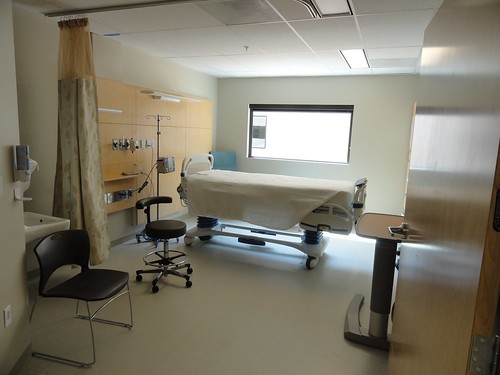
The right LED lighting in exam rooms is vital for helping doctors with any procedure. Lighting and color play a role in exams by helping the physician plainly see what is going on. Older lighting can sometimes give off a harsh hue, leading things to look different or even worse than they should. The most advanced LEDs, however, offer both a CRI of 95% and the crucial ability to precisely adjust both the strength of the light and even the specific intensity of the whites it illuminates. This is important because whether the procedure is more internal or external or the precise skin tone of the patient will change which white setting is optimal. Ultimately, you can have just as much precision in how you control your lighting as you do with your scalpel with this technology. In addition, the smaller heat output of these LEDs makes them easier to handle and use in tight spaces. But lighting is used in many other areas as well.
Office Lighting: CFL & LED Mix

While in the exam room, precise control, size, and heat are greater concerns. For lighting your entire office, there are other things to take into account. While LEDs are the clear winner in the operating room because of everything mentioned above, the question for the office is whether to use LED or Compact Fluorescent Lighting (CFL). There's a lot to think about here: LEDs can be dimmed, produce less heat, last longer, and are easier to dispose of. CFLs, on the other hand, are better for lighting large spaces and are cheaper. The best option is to incorporate a mix of the two, with LEDs being used for directional illumination like a desk lamp while CFLs light the larger office space. But you can't forget long-term costs when making these decisions. With electricity being a major utility cost for hospitals, clinics, and offices, using modern lighting leads to greater sustainability and cost savings.
Medical Equipment: LED

For all the reasons mentioned in the exam room section, LEDs have become standard in all varieties of medical equipment. From mobile examination lights to handheld otoscopes, the ability to adjust the intensity, light content, and field of a light source is fast becoming indispensable for any modern clinic or hospital. This is because LEDs simply allow you to see colours and details that halogen lights don't. But to get all of these benefits, make sure you're buying second generation LEDs, as otherwise you'll be missing out on important advances in efficiency and performance. Without this technology, quality of care suffers. As Neil Finkler, M.D. at Florida Hospital in Orlando put it:
There's no question that the quality of light is better and as a result I think things go better. You're able to see better. You're able to get better hemostasis. We're able to see where we couldn't see before.
Improving Your Lighting, Improving Your Work
LEDs and modern CFLs are changing the lighting industry as well as improving the care of patients and the productivity of physicians and their staff. When it comes to creating a better healthcare environment, you have to address all aspects of the medical experience, so don't leave your lighting needs as an afterthought. The benefits of setting up proper lighting should be foremost in your mind as you replace your old lights. Do you have a take on the importance of lighting in a medical setting? We'd love to hear your input, please leave a comment below.