

Practi-Baby Infant With Carry Bag (Dark Skin)
Practi-Baby Infant With Carry Bag (Dark Skin)
£129.99 ex.VAT
£129.99 ex.VAT
AVAILABLE TO BACKORDER - Buy now for despatch when stock arrives.
SKU: 8-124
Couldn't load pickup availability

Shipping
Shipping
FREE STANDARD SHIPPING available on all orders over £35 EX VAT (mainland UK only)
Next Working Day - available until 8pm Monday to Friday
Weekend Despatch - available until 12pm Sunday for MONDAY delivery (Next working day)
Saturday Delivery Service - available until 5pm Friday.
Why buy from Medisave?
Why buy from Medisave?
Medisave supplies health professionals, business and home users.
- Credit card, PayPal and Amazon Payments accepted
- Free delivery over £25 ex VAT
- NHS, school or company purchase order - email accounts@medisave.co.uk
- Laser engraving
- Delivery to private or commercial addresses
- Google Certified Shop
- Registered with the Medicines and Healthcare products Regulatory Agency (MHRA)
- ISO9001 quality management system + ISO 140001 environmental
- Established 1999
Need some advice? Speak to our friendly team on 0800 804 6447
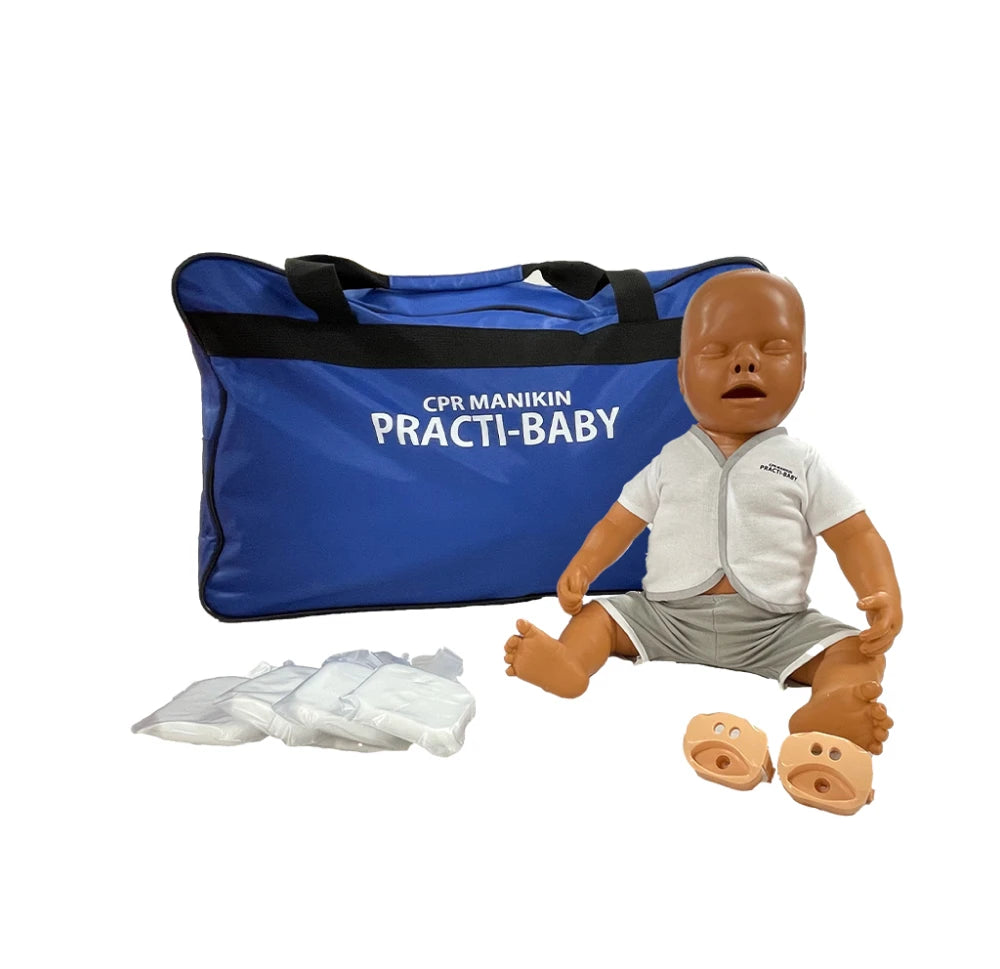
Practi-Baby Infant with Carry Bag
This PractiBaby manikin provides realistic CPR training on an infant. The airway system vents air through the back of the manikin, providing increased infection control.
Features
- Realistic weight and size
- Realistic nose function
- Head tilt allows correct head placement when opening the airway
- Head moves backwards, forwards and side to side for more realistic airway opening
- The chest clicker can be turned off
- Stable placement when lying on its back
- Sits up
- Can use an OP airway when the valve and lungs are removed
- Life-like chest compression
- 4 lungs
- 2 airway valves
- Manual
- Exhaled air from the manikin is discharged in the back of the head for better infection control
FAQs
How to give infant CPR?
Firstly, check that the area is safe, that there are no hazards around, and that the child's responsive by gently tapping their arm and asking loudly if they're okay.
If the child responds by answering or moving, leave them in that position as long as they're not in danger, check their condition, get help if needed and reassess the situation regularly.
If the child does not respond, call 999 and carefully turn the child onto their back, ensuring their head is in a neutral position (the head and neck are in line with one another). Use your fingertips under the point of the child's chin and lift it gently, ensuring you don't push on the soft tissue under the chin, as this may block their airway.
Check the child is breathing by looking for chest movement, listening to the nose and mouth for breathing sounds and feeling for air movement on your cheek. If they're breathing normally, turn them on their side with the head tilted slightly back so the airway remains open and check for continual breathing.
If the child is not breathing normally, carefully remove any obvious obstructions in their mouth without pushing it further down their throat, give 5 initial rescue breaths and note any gagging or coughing responses (signs of life).
To give an infant rescue breaths, ensure their head is in a neutral position and lift the chin. Take a breath, then cover the baby's mouth and nose with yours to ensure it's sealed. Blow a steady breath into the baby's mouth and nose for over 1 second, ensuring it's sufficient to make the chest visibly rise. Keeping their head tilted and chin lifted, take your mouth away and watch for the chest to fall as air comes out.
Continue rescue breathing until the baby begins breathing normally on their own. If there are no signs of life, chest compressions should be immediately combined with rescue breaths, 2 breaths for every 30 compressions.
Using 2 fingers push down 4cm on the infants breastbone before releasing and allowing it to come back up. Repeat this at a rate of 100 to 120 compressions a minute.
Continue CPr until the baby shows signs of life or qualified help arrives.